English
 français
 Deutsch
 русский
 italiano
 español
 português
 العربية
 日本語
日本語 Polski
 中文
中文
Jak Możemy Ci pomóc
Ty możesz skontaktować się z nami w dowolny dogodny dla Ciebie sposób. My są dostępne przez 24 godziny / 7 dni przez e-mail lub telefon.
Skontaktuj się z nami
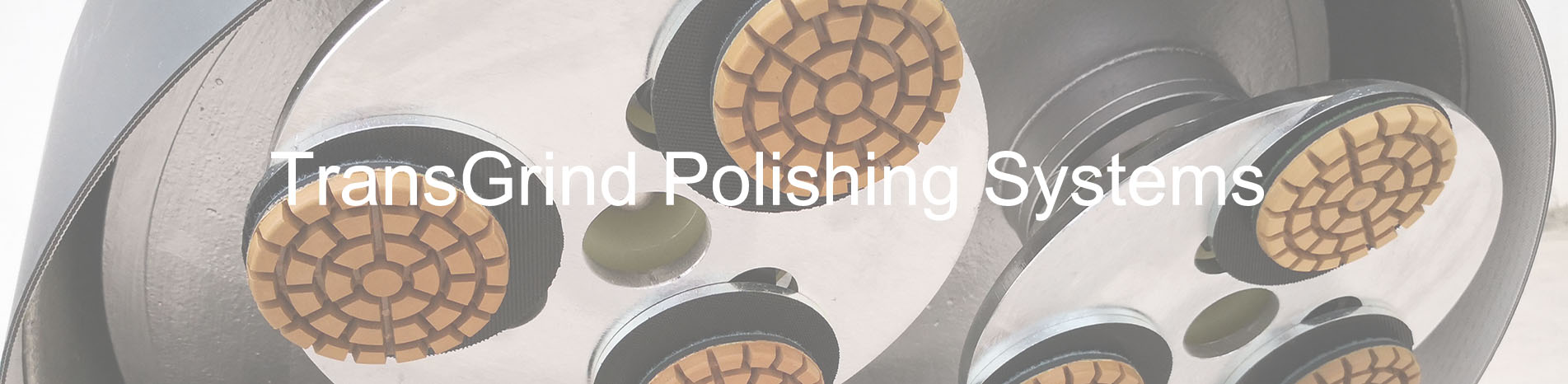
Przejście od szlifowania betonu do polerowania jest kluczowym etapem, który silnie wpływa na wygląd gotowej posadzki oraz jej końcową jakość. Ta faza nie polega wyłącznie na wygładzeniu powierzchni. Chodzi o dokładne udoskonalenie wzoru zarysowań pozostawionego po pracach szlifierskich oraz przygotowanie płyty do procesu polerowania. Prawidłowo wykonane przejście może pomóc zminimalizować widoczne zarysowania, zwiększyć skuteczność polerowania i zapewnić bardziej równomierny efekt końcowy.
Określ, kiedy posadzka jest gotowa do polerowania
Przed rozpoczęciem polerowania wykonawcy powinni najpierw sprawdzić powierzchnię i upewnić się, że etap szlifowania został prawidłowo zakończony. Posadzka powinna wykazywać jednolity wzór zarysowań, a wszelkie głębsze ślady lub pozostałe niedoskonałości powierzchni należy usunąć przed przejściem do drobniejszych narzędzi. Ten etap przejściowy usuwa wcześniejszy wzór szlifowania w kontrolowany sposób, jednocześnie tworząc gładszą bazę pod polerowanie żywicznymi narzędziami. Jeśli ten etap zostanie wykonany zbyt szybko, pozostałe zarysowania mogą być znacznie trudniejsze do całkowitego usunięcia w późniejszym czasie.
Wybierz odpowiednie narzędzia przejściowe
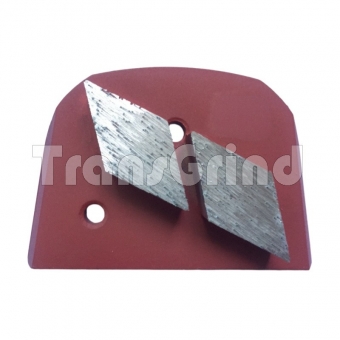
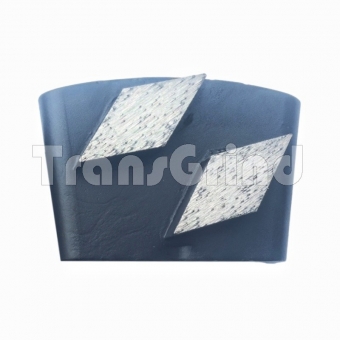
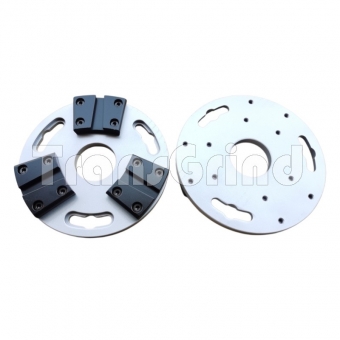
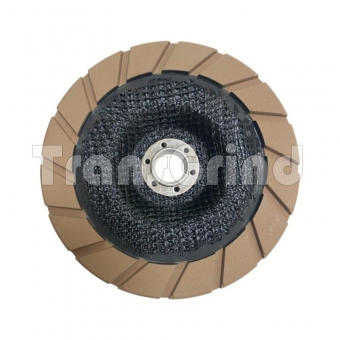
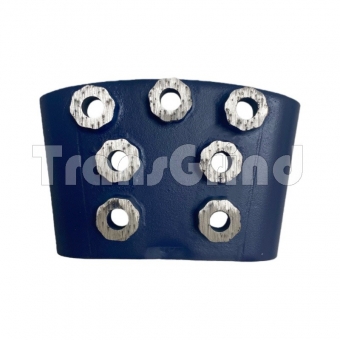
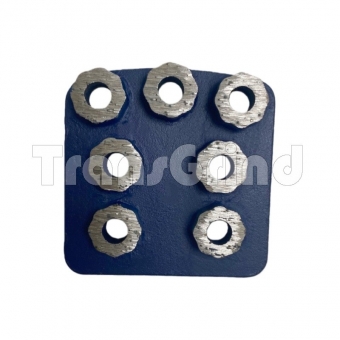
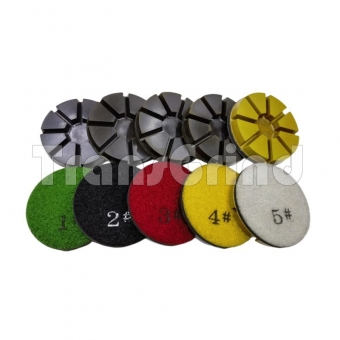
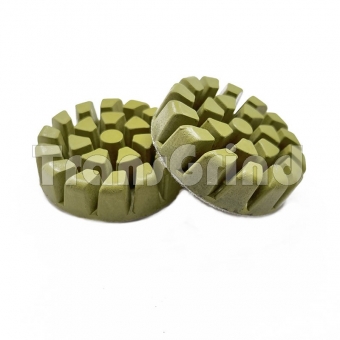
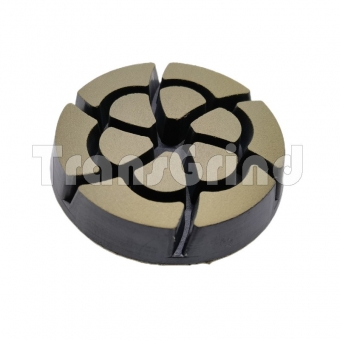
Wybór odpowiednich narzędzi przejściowych ma znaczenie, ponieważ ten etap wymaga zachowania właściwej równowagi między skutecznym szlifowaniem a poprawą wykończenia powierzchni. W zależności od czynników takich jak twardość betonu, zastosowana sekwencja szlifowania oraz oczekiwany rodzaj wykończenia, wykonawcy mogą używać hybrydowych przejściowych narzędzi diamentowychw tym opcji takich jak ceramiczna przejściowa podkładka polerska oraz przejściowe narzędzia MCaby udoskonalić wzór zarysowań i przygotować posadzkę do polerowania. Te opcje pomagają udoskonalić wzór zarysowań i przygotować posadzkę do polerowania. Dzięki odpowiednim narzędziom proces płynniej przechodzi od agresywnego szlifowania do drobniejszych etapów polerowania — bez niepotrzebnego usuwania dodatkowego materiału.
Stosuj kontrolowany proces, aby uzyskać lepsze rezultaty
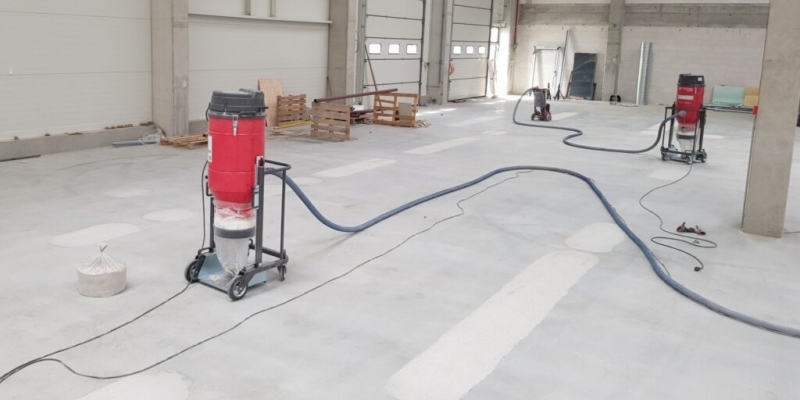
Płynne przejście od szlifowania do polerowania wymaga czegoś więcej niż tylko zmiany narzędzi. Operatorzy powinni utrzymywać stały ruch maszyny, uważnie obserwować stan powierzchni i przestrzegać odpowiedniej progresji gradacji przez cały czas pracy. Jeśli etapy przejściowe zostaną pominięte — lub jeśli polerowanie rozpocznie się zbyt wcześnie — mogą pozostać nierówne zarysowania, które później będą trudne do skorygowania podczas kolejnych etapów polerowania. Kontrolowane podejście pomaga wykonawcom uzyskać wyraźniejszy wygląd powierzchni i bardziej przewidywalne rezultaty.
Wybierz kompatybilne narzędzia diamentowe do zastosowań profesjonalnych
Kompatybilność narzędzi również odgrywa kluczową rolę w utrzymaniu stabilnej wydajności podczas projektów szlifowania i polerowania betonu. TransGrindoferuje rozwiązania w zakresie narzędzi diamentowych do profesjonalnego przygotowania i polerowania posadzek, a produkty są zaprojektowane do współpracy z powszechnie używanymi systemami szlifowania, takimi jak maszyny HTC, Lavina i Husqvarna. Gdy wykonawcy łączą odpowiednie narzędzia przejściowe, kompatybilny sprzęt i właściwą kontrolę procesu, łatwiej jest przejść od szlifowania do polerowania oraz poprawić ogólną jakość gotowej posadzki.
Dobrze kontrolowany etap przejściowy może znacząco wpłynąć na wygląd i spójność polerowanej posadzki betonowej. Dzięki dokładnej ocenie powierzchni, wyborowi odpowiednich narzędzi oraz utrzymaniu spójnego procesu od szlifowania do polerowania wykonawcy mogą ograniczyć konieczność poprawek, zwiększyć wydajność pracy i uzyskać bardziej jednolite polerowane wykończenie w szerokim zakresie zastosowań betonowych.

 IPv6 obsługiwana sieć